
English| EUR
Suggested for you
More currencies
Choose a language
Hamburg does not have one cruise port. It has three separate Elbe-side terminals, several kilometres apart, and the one printed on a boarding pass decides everything about a day ashore. This where do cruise ships dock in hamburg guide sets out which berth is which and what the published access rules mean in practice.
Quick answer
Cruise ships dock at three terminals: Cruise Center HafenCity, Cruise Center Altona and Cruise Center Steinwerder, all in Hamburg, Germany. Published hours run 00:00–23:59 daily, but terminals are operational only during ship arrival or departure, with a realistic arrival window of 07:00–18:00. Confirm the assigned berth with the line, as it changes per call.
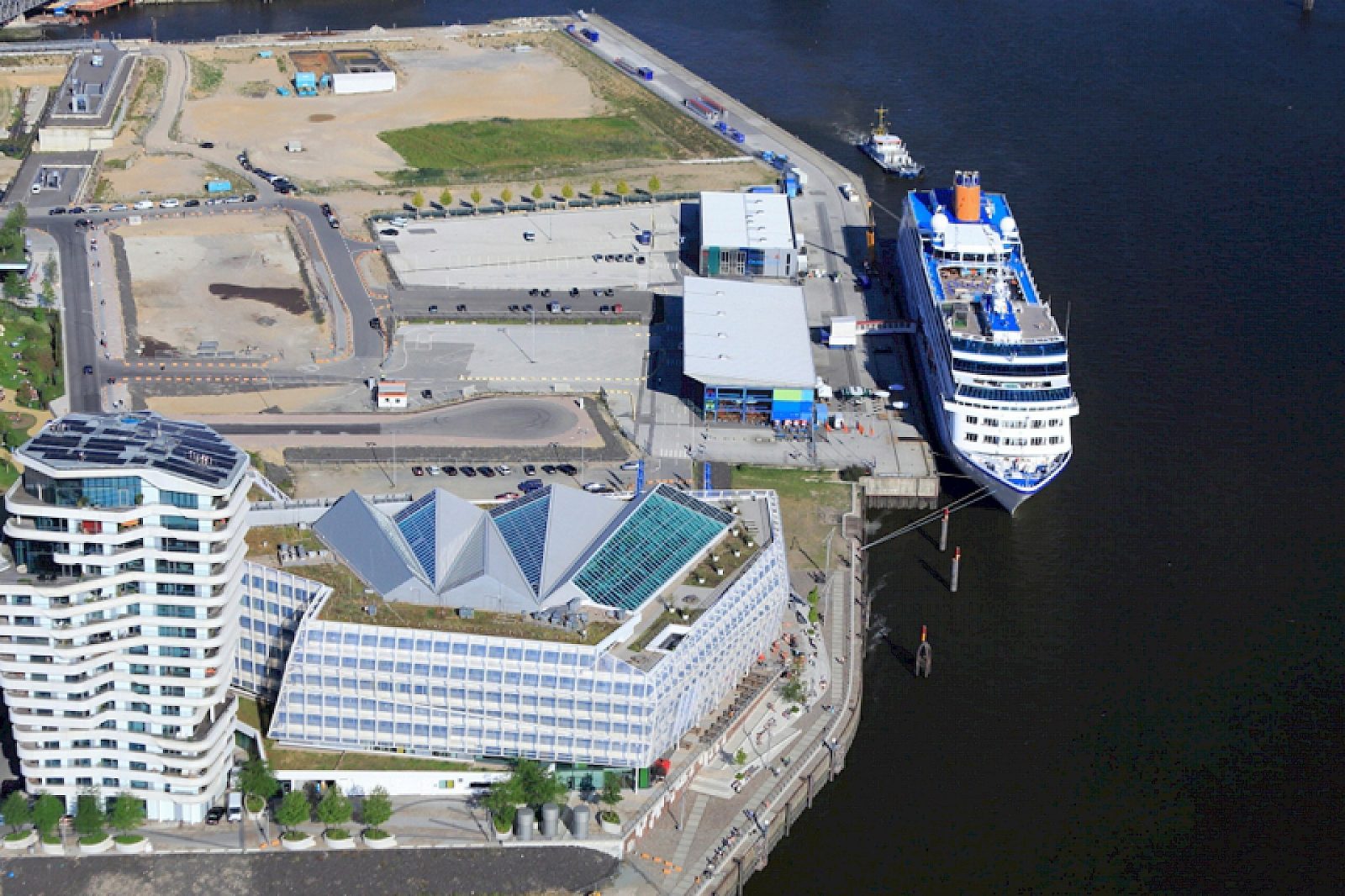
The Elbe carries seagoing cruise vessels roughly 100 kilometres inland, which is why Hamburg berths ships in the middle of a working city rather than at a coastal outpost. That inland position explains the split: no single quay in a dense harbour could absorb the traffic, so the Kreuzfahrtterminals were spread along both banks. Anyone asking where do cruise ships dock in hamburg is really asking which of three addresses applies on one particular morning — Cruise Center HafenCity beside the Elbphilharmonie, Cruise Center Altona downstream near the fish market, or Cruise Center Steinwerder on the southern bank opposite the Landungsbrücken. The distinction matters because the three sit in genuinely different districts. HafenCity puts passengers within walking distance of Speicherstadt's brick warehouses and the Elbphilharmonie plaza. Altona sits in a residential quarter with its own S-Bahn station and a long riverside promenade. Steinwerder lies inside the industrial port, ringed by container cranes and dry docks, cut off from the centre by the river itself. Ship size and turnaround type drive the allocation, and large vessels calling on the same day are routinely distributed across all three berths. Assignments are published per call rather than fixed by shipping line, so last season's berth is not a reliable guide to this one. Practical consequences follow. A terminal is not a public building with a permanent lobby; the facilities open around scheduled arrivals and departures and stand empty otherwise, which is why a printed daily schedule beats an assumption. Passengers should carry the terminal name, not just the word Hamburg, when arranging transfers — a taxi sent to the wrong bank of the Elbe costs a substantial part of a port day. The payoff for getting this right is the harbour itself. Between the piers, tugs, and the illuminated skyline after dusk, the port reads best from the water, and the timing of a call often leaves an evening free before the ship sails. Knowing where do cruise ships dock in hamburg is therefore the first planning step, not the last: fix the berth, then build the hours around it.
“A terminal is not a public building with a permanent lobby — it wakes for a ship and sleeps again.”
Access to the cruise terminals in Hamburg is not subject to any entrance or visitor fees. The terminals are functional facilities rather than attractions, and entry is limited to authorized passengers and personnel during scheduled vessel operations.
Work through these steps in order, from the weeks before sailing down to the morning your ship is in port.
Everything you need to know about where do cruise ships dock in hamburg
Cruise ships in the Port of Hamburg typically arrive at the Cruise Center HafenCity, Altona, or Steinwerder. Determining exactly where do cruise ships dock in hamburg depends on your specific vessel's itinerary. You should verify your departure or arrival point directly with your cruise line before heading to the waterfront.
To know where do cruise ships dock in hamburg for your specific trip, check your cruise documents provided at the time of booking. Each of the three main terminals serves different operators, so confirming the correct location is essential for a smooth departure. Passengers looking for information on Hamburg cruise port logistics can consult the official operator website for daily schedules.
The port area is well-connected to public transit, though specific stops vary by terminal. Travelers often utilize harbor ferries or local rail lines to reach the waterfront landmarks. Detailed transit information for each site is provided in our dedicated transportation section.